Vipassana Meditation: A Path to Mental Clarity and Peace

As I write this, just days after emerging from my third 10-day Vipassana meditation course, I’m struck by how different everything feels. The same world surrounds me, yet my perception has shifted fundamentally. Like countless others before me, I embarked on this journey in spring of 2017 in Texas, USA following the teachings of S.N. Goenka, seeking something I couldn’t quite name.

The course structure is deceptively simple: ten days of noble silence, meditation from 4:30 AM to 9:00 PM, vegetarian meals, and no external communications. But within this simplicity lies a profound technique for mental purification that has been preserved for over 2,500 years.

The first three days focus solely on Anapana meditation – observing the natural breath. I initially found this frustrating. “Just breathing? For three whole days?” My mind rebelled, churning up forgotten memories, future plans, and endless distractions. But gradually, almost imperceptibly, my attention grew sharper, more focused.

Then came Vipassana proper – the systematic observation of bodily sensations with complete equanimity. Goenka-ji’s evening discourses illuminated the profound wisdom behind this practice. Every sensation, pleasant or unpleasant, shares one characteristic: impermanence (anicca). By observing this truth experientially, we begin to break free from the cycle of craving and aversion that causes our suffering.

The challenges could be intense for many people. Sitting still for hours can bring physical pain. Old memories and emotions surfaced with surprising intensity. Yet the technique offered a practical tool: remain equanimous, observe sensations objectively, and watch them pass away. Through this process, deep-rooted mental patterns (sankaras) gradually dissolve.

What strikes me most was the scientific nature of the technique. This isn’t about adopting new beliefs or joining a religion. It’s a practical method of self-observation and mental purification that anyone can verify through their own experience. As Goenkaji often emphasized, “Truth is truth. Don’t accept it because I say so – experience it for yourself.”

The benefits have been profound. My mind feels clearer, more stable. Reactions that once seemed automatic now have a pause button. There’s a deeper understanding that everything – good or bad – is temporary. Most importantly, I’ve gained a practical tool for continuing this work of mental purification in daily life.

To those considering a Vipassana course: yes, it’s challenging. Yes, it requires dedication. But the potential rewards – genuine peace, mental mastery, and liberation from suffering – are immeasurable. The courses are offered freely, run purely on donations from those who have completed a course and experienced benefits.

As Goenkaji would say, “Be happy!” But not just with blind faith – experience the truth for yourself. May all beings be happy, peaceful, and liberated.
Cheers!


Bliss Molecule “Anandamide”

The word “anandamide” originates from the sanskrit “ananda,” which roughly translates to “bliss” or “joy,” an indication of the cannabinoid’s properties as a mood enhancer. Also called N-arachidonoylethanolamine (AEA), anandamide interacts with the body’s CB receptors similarly to cannabinoids like THC. It’s a neurotransmitter and cannabinoid-receptor binding agent that functions as a signal messenger for CB receptors located in the body.

References:

https://www.leafly.ca/news/science-tech/meet-bliss-molecule-anandamide-cannabinoid

Being Bored

Many people are feeling bored at home due to being stuck in their houses due to COVID-19 or otherwise. Please know that if you are an adult, being bored is on you. I hope you would find a challenge to work on instead of doing nothing.

You would have to take on the challenge, take the leap and take some responsibility to find something that might not work.This may include learning new languages, developing cooking skills, preparing for career changes, developing work routine etc..

I’m glad that you are feeling bored and now excited to see what you are going to do about it.

Cheers!

Only Person on Planet

True wants in life

“What would you want in life if you were the only person on this planet”. This could be a very powerful way of thinking about priorities in life instead of chasing materialistic (cars, house, mansions) and non-materialistic goals (name, fame etc..), because someone else has it. If we only get happy by having things that others don’t have, it is not truly happiness, but a sign of sickness.

Be joyful!!

Don’t Think About Monkey

When someone says “I don’t like him/her”. That disliked someone has more impact on our life compared to the person we like or love. Thing about it for a second. What does our mind think more of? the good things that happens to us all day long or one bad thing for that day. Bad things have far more influence on us. When you are told by someone or even by yourself to not think about something (example could be money, being fat, broken relationship, monkey etc..), our monkey mind can’t help but think of the unwanted things.

Next time, before categorizing something good or bad, think twice about the disproportional impact of bad.

Cheers!

Life Ingredients

Life is a game of just five ingredients. Even a pizza requires more ingredients. In yoga, both the human body and the cosmos are based on the magic of only five elements: earth, water, fire, air and ether.

Many people who attained self-realization have often termed life a cosmic joke due to this utterly simplistic ingredient.

Keep life simple.

Cheers!

Vipassana

Benefits of Meditation are quite apparent in COVID-19 days as people lacking internal calm and not in harmony with their mind and body are struggling with anxiety, loneliness and stress. Being a Vipassana practitioner, I am reaping the benefits of this wonderful meditation technique and recommend to people who are seriously thinking about getting into meditation. Currently, most Vipsassana centers around the world are closed, but below is quick summary on where to start.

Keep Calm and Meditate

First: What is Vipassana ?

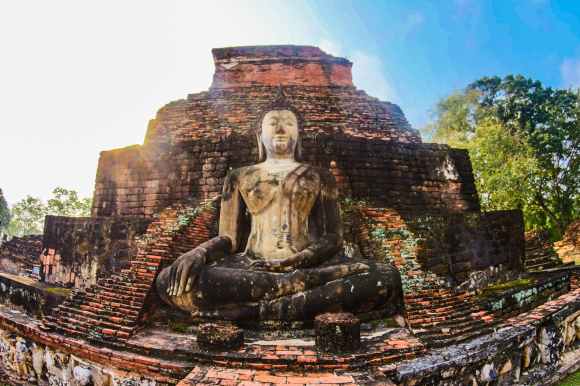
Vipassana means to see things as they really are and is one of India’s most ancient techniques of meditation pioneered by Buddha and others.This is self observance technique focusing on breathing and body sensation.

Learn more literature @ https://www.dhamma.org/

Second: What is not Vipassana ?

  • Not affiliated to any religion
  • No chanting of mantras or anything during practice/learning

So, how can you start?

Below is a step-by-step guide for those who are interested in practicing Vipassana::

  1. Find a nearest Dhamma Centre
  2. Find a course with availability for 10-day courses (new students only)
  3. Apply to reserve your seat
  4. Get Confirmation
  5. Have a cheerful life 🙂

Cheers!

Be a Kid

As an adult, our mind don’t simply take in the world as it is so much as they make educated guess about it. Relying on the guesses, which are based on past experience, saves the mind time and energy.

For example, instead of trying to figure out what teh fractal pattern of green dots in its visual field might be, it just assumes leaves on the tree from past experiences.

On the other hand, kids’s perception are not mediated by expectations and conventions in the been-there, done-that way, they see world as it is.

Spirituality helps in restoring this childlike immediacy, sense of wonder and experience of unity with nature.

Cheers!!

Isha Upa Yoga Practice:

Keep Calm and Practice Yoga.

1. Yoga for Health: Directional Movements (Arm-4 directions)

i. Sideways (Start with arms in front ->Exhale-outward arm rotation -> Inhale-Inward Arm Rotation (3 cycles)

ii. Front ways (Start with arms in front ->Exhale-outward arm rotation -> Inhale-Inward Arm Rotation (3 cycles)

iii. Up towards Sky (Start with arms in front ->Exhale-outward arm rotation -> Inhale-Inward Arm Rotation (3 cycles)

iv. Down towards Earth (Start with arms in front ->Exhale-outward arm rotation -> Inhale-Inward Arm Rotation (3 cycles)

Video Link:    https://isha.sadhguru.org/yoga/video/yoga-for-health/

2. Yoga for Success: Neck Practices (5 practices)

i. Up-Down: Start with lowered chin touching chest -> Inhale, move head up and back -> Exhale, move head down (3 cycles)

ii. Right-Left Neck Twist Rotation: Start with head straight -> Inhale, move head towards right -> Exhale, bring it back to centre ->Inhale, move head toward left -> Exhale, bring it back to centre (3 cycles)

iii. Right-Left Neck Tilt: Start with head straight -> Exhale, move right ear towards right shoulder -> Inhale, move head to centre ->Exhale, move left ear towards left shoulder -> Inhale, move head to centre (3 cycles)

iv. Circular Rotation (clock and anti clockwise):Start with Chin down touching chest -> Inhale, rotate head towards right shoulder (head goes back) ->Exhale, head comes down  -> Inhale, rotate head towards right shoulder (head goes back) ->Exhale, head comes down  (3 cycles)

v. Forward-Backward Shoulder Rotation: 

i. Forward Rotation: Start with relaxed shoulder -> Inhale, go up -> Exhale, Come Down (3 cycles)

ii. Backward Rotation: Start with relaxed shoulder -> Inhale go up -> Exhale Come Down (3 cycles)

Video Link: https://isha.sadhguru.org/yoga/video/yoga-for-success/

3. Yoga for Wellbeing: Yoga Namaskar (7 Steps)

i. Up-Down, Standing Position (3 steps): Start with namaskar in front of chest -> Inhale, move palms up towards sky -> Exhale with Sound, move palms down behind neck -> Inhale, move palms up towards sky -> Exhale with Sound, bring palms to the front of chest (3 Cycles)

ii. Up-Down, Squatting Position (3 steps): Start with namaskar in front of chest -> Inhale, move palms up towards sky -> Exhale with Sound, move palms down behind neck -> Inhale, move palms up towards sky -> Exhale with Sound, bring palms to the front of chest->Inhale, hand Straight out front ->Exhale with Sound with sound,  hand to the chest

iii. Baalasana (7th step): Bring Knees to ground, lean forward and place head on ground, stretch forward, rest palms on the ground and make a triangle touching thumbs and index fingers (minimum 2 minutes or until breath stabilizes) and then come up and stand in the starting position

Video Link: https://isha.sadhguru.org/yoga/video/yoga-for-wellbeing/

4. Yoga for Peace: Nadi Shuddhi (Breathing Exercise 4 minutes)

i. Sit Cross Legged with spine comfortably erect

ii. Left hand loosely placed on middle of the lap, palm facing upward

iii. Use Thumb and Ring Finger for blocking nostril

iv. Switch after each exhalation

Video Link: https://isha.sadhguru.org/yoga/video/yoga-for-peace/

5. Yoga for Joy: Nadi Shuddhi (Chanting Exercise 4 minutes)

i. Sit in cross legged position, palms resting on thigh facing upward, spine confortably erect

ii. Aa: 7 times

iii. Uu: 7 times

iv. Mm: 7 times

Video Link: https://isha.sadhguru.org/yoga/video/yoga-for-joy/

6. Yoga for Inner Exploration: Shambhavi Mudra (Observe Breathing 3-6 minutes)

i. Sit comfortable in cross legged position, create a yogamudra using your fingers (thumb and index making a circle and other fingers straight, no gap between any finger 

ii. Close eyes and sit with slightly upturn face, natural focus on eyebrows

iii. Observe breath for 3-6 minutes

Video Link: https://isha.sadhguru.org/yoga/video/yoga-inner-exploration/

7. Yoga for Love: Namaskar (3-5 minutes)

i. Create a namaskar position and hold it for 3-5 minutes with full emotional of a loved one

Video Link: https://isha.sadhguru.org/yoga/video/yoga-for-love/

Cheers!